
Long hours at a computer
Sustained sitting shortens hip flexors, weakens the deep back muscles and pulls the upper spine into flexion.

Posture Club at Theracure
Find out what your posture is telling you — and what to do about it.
A physiotherapy-led assessment that identifies spinal, shoulder and pelvic misalignment through static and dynamic testing, followed by a correction plan built around your body, your work and your daily routine.

About the service
A posture assessment is a comprehensive physical examination of your body posture, carried out by a physiotherapist while you are standing, sitting and performing common movements such as walking or bending. It establishes the alignment of your spine, the position and movement of your shoulders and pelvis, your head position, and your overall body structure and balance.
Your posture is a soft indicator of how well — or how poorly — your body is coping with the demands of everyday life: hours in an office chair, time bent over a phone, long drives, or simply standing in a queue. The posture assessment and correction program in Mumbai offered by TheraCure detects spinal, shoulder and pelvic misalignment and builds a corrective action plan from what we find.
Poor posture alters the body's natural alignment. Over time that places enormous stress on muscles and joints and causes musculoskeletal pain. A postural assessment is how we detect that poor posture and identify what is causing it.
Warning signs
Most of us think of bad posture as purely aesthetic, but the warning signs are usually subtle and easy to miss. These are the kinds of problems that could benefit from a professional posture assessment.

Recognising these symptoms is the first step towards correcting them and preventing more serious postural problems later.
Root causes
During a posture assessment your physiotherapist typically observes several contributing factors at once. These are rarely stand-alone problems — they usually occur together.
Sustained sitting shortens hip flexors, weakens the deep back muscles and pulls the upper spine into flexion.

Every degree the head drops forward multiplies the load on the neck extensors, producing the classic forward head position.

A low monitor, unsupported lower back or badly placed keyboard forces the body into a compensating posture all day.

When the deep abdominal and spinal stabilisers are underused, the spine loses its support and the posture collapses.

Added weight at the front shifts the centre of gravity, increasing the lumbar curve and loading the lower back.

Repeated one-sided loading — handbags, laptop bags, heavy schoolbags — creates uneven shoulder and hip height.
Tight chest and hip muscles and previous injuries are two further causes we look for, since both change how the body distributes load long after the original problem has settled.
Two ways we assess
Sometimes it is hard to see what is going on while you are standing still, so we may perform a static assessment, a dynamic assessment, or both, depending on the information we need.

A static posture assessment is used in most posture consultations. It shows us your posture in a relaxed standing position and in sitting. We assess you in profile and from behind against a plumb line to indicate spinal alignment, the relative height of your shoulders, the position of the pelvis in both side and back view, and the position of your head. Your standing posture is then compared with your sitting posture.
A dynamic posture assessment looks at how your posture behaves when you are moving — squatting, walking, or performing a task specific to your sport or your work. It is particularly useful for athletes and for anyone whose posture holds up at rest but collapses under activity, including people in rehabilitation.
The Posture Club at Theracure routinely uses dynamic posture assessment alongside static screening, because the compensations that cause pain often only appear once the body is loaded.

Our approach
A structured four-stage pathway, from analysis through to the ergonomic changes that keep the results.
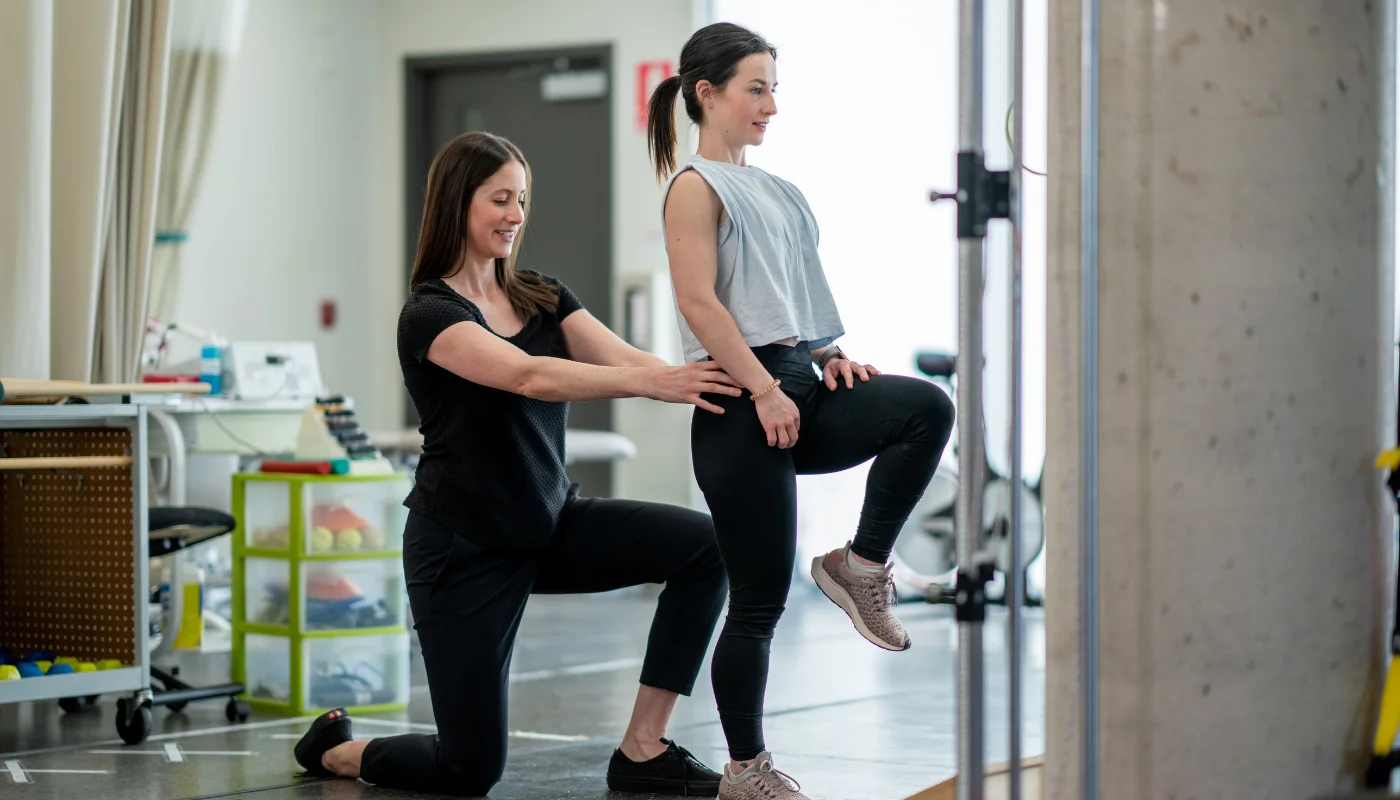
Your physiotherapist performs a series of postural assessments and mobility tests to determine the areas of postural imbalance.
Based on the assessment, your personal posture correction plan is designed to balance your musculoskeletal system according to your specific needs.
Your therapist guides you through corrective exercises to restore proper posture, and may add massage, soft tissue therapy, myofascial release, Kinesio taping and muscle lengthening techniques to release tight muscles and activate weak postural muscles.
Postural control extends beyond the musculoskeletal system, so we advise on desk and sleeping posture, with referral to our office ergonomics consultation or home ergonomics service where useful.
With consistent application of the program, changes in the body and in posture can begin to appear in as little as one week, although the full pathway length depends on how long-standing the problem is.
Why it matters
The human spine is constructed to bear the weight of the body in a particular alignment. When a person slouches while sitting or standing, that weight is distributed unevenly, and a range of problems can follow — tension headaches, low back pain, rounded shoulders and shallow breathing among them.
What good posture does for you:

Who it is for
A postural assessment is indicated for the following groups.
Anyone spending long hours working at a desk and facing a computer monitor.
People with persistent neck, shoulder and lower back pain linked to posture.
Children and adults carrying heavy schoolbags or studying for very long hours.
Postural alignment altered by pregnancy weight gain and by feeding and carrying positions.
Anyone wanting to avoid the compensatory pain that follows a postural imbalance under load.
Elderly people managing age-related changes in posture, balance and spinal alignment.
Individuals recovering from any physiotherapy condition where posture affects the outcome.
Inside the program
TheraCure offers a comprehensive posture assessment and treatment package for a range of musculoskeletal problems, combining the following evidence-based therapies.

Alongside the hands-on work, the program builds awareness of your own faulty postural patterns and mindfulness about moving in better ones — which is what makes the change hold outside the clinic.
Start today
Staying conscious of your posture all day is not easy. These checks help you notice the mistakes as they happen.
How to see us
Posture work does not always happen best in a clinic room — sometimes it needs to happen where you actually sit and work.

Full static and dynamic assessment with hands-on treatment at our Opera House, Charni Road clinic.

We assess the desk, chair and screen you actually use. See home ergonomics and office ergonomics.

Cannot reach the Mumbai clinic? Book an online consultation for posture correction.

Meet your therapist
Founder, TheraCure — Consultant Physiotherapist & Occupational Therapist
Dr. Pooja Mehta leads the Posture Club at TheraCure, where posture is treated as a musculoskeletal problem with an ergonomic cause — not simply a habit to be corrected by being told to sit up straight.
Her approach combines static and dynamic postural analysis with hands-on therapy and a correction program built around the individual's work, home setup and daily routine, so the alignment gained in the clinic is sustainable outside it.
Common questions
Your physiotherapist will ask you to stand and sit in certain positions and, where relevant, perform particular movements. They will examine your spinal alignment and pelvic position, assess which muscles are too tense or too weak, and explain their findings to you.
A static assessment considers your posture when standing or sitting still. A dynamic assessment looks at your posture during movement, such as walking or playing a sport, and is useful for spotting issues that only arise when you move.
It depends on the individual patient and the severity of the problem. Minor misalignments exacerbated by specific postures may only require a few sessions of physiotherapy, whereas more serious or long-standing issues may require additional treatment.
Posture correction is recommended in cases of persistent neck or lower back pain, as poor postural alignment can be a major contributing factor. Physiotherapy for these types of musculoskeletal pain can include posture correction, joint mobilisation and muscle strengthening exercises.
Both. Physiotherapists provide posture correction for patients with existing pain as well as those who wish to prevent future injury. People with a sedentary job, or who spend long periods walking or sitting, are especially recommended to have a postural assessment.
There is no special preparation. It is wise to wear something comfortable that allows you to move freely and lets the physiotherapist see your spine and musculature clearly.
Yes. In addition to posture correction at the clinic, TheraCure provides an online consultation for posture correction for those unable to come to the Mumbai clinic.
Posture Club at Theracure
Book a static and dynamic posture assessment in Mumbai and leave with a correction plan built around your body and your working day.