Tight & restricted fascia
Loosening tight, adhered or restricted fascia and soft tissue.

Physiotherapy · Myofascial release
Release tight, restricted and scarred soft tissue — and move freely again.
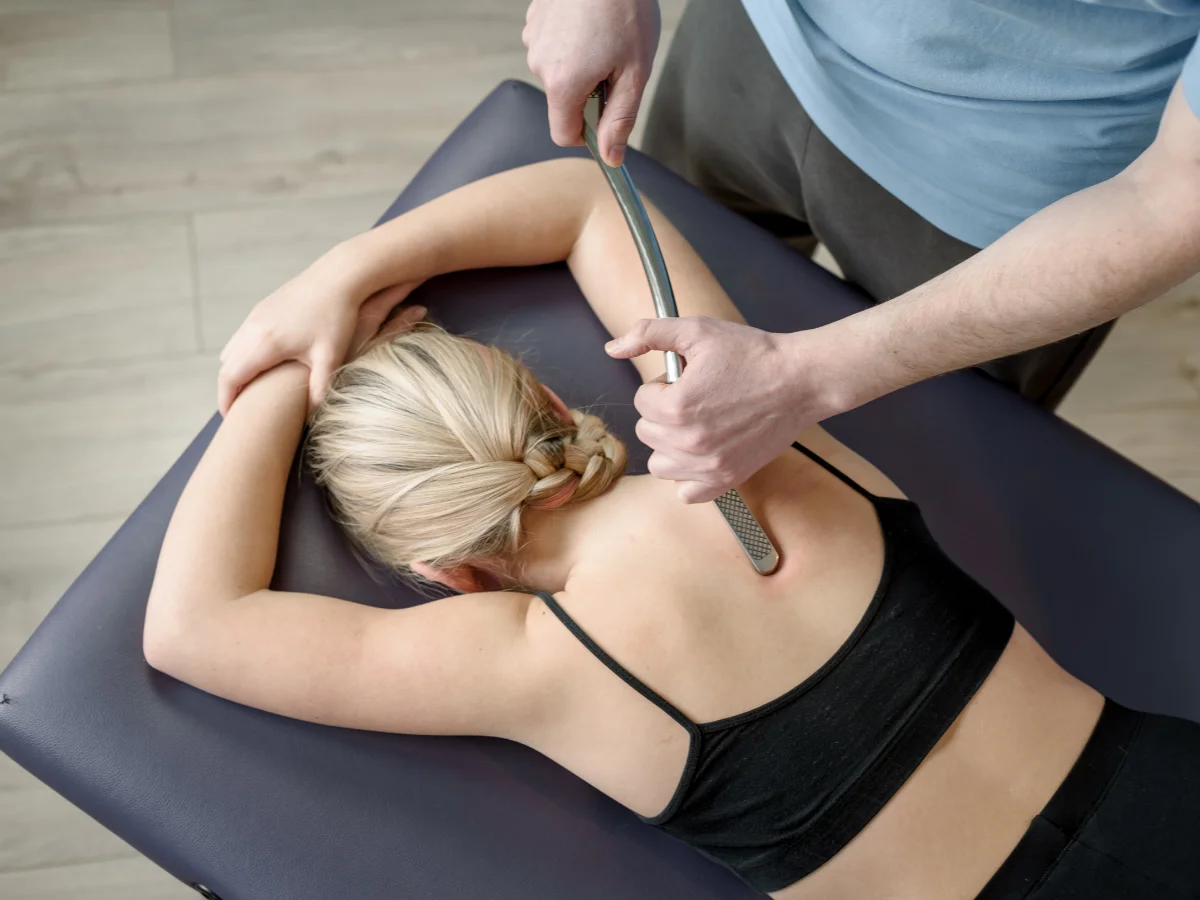
Instrument-Assisted Soft Tissue Mobilization (IASTM) is a myofascial release technique performed by our physiotherapists to find and break up fascial restrictions using specialised stainless steel instruments — always as part of an assessment-led treatment plan, never a stand-alone spa massage.
Serving South Mumbai: Opera House, Charni Road, Girgaon, Marine Lines, Churchgate, Nariman Point, Colaba, Fort, Malabar Hill, Breach Candy, Cuffe Parade, Tardeo & Grant Road.
About the service
IASTM is a physical therapy treatment that uses a cross-friction massage technique, applying specialised instruments to the skin, muscles, tendons and fascia. Unlike regular friction massage, the contoured edges of the instruments let the therapist reach under the tissue layers and apply precise, controlled pressure to hard-to-reach areas.
Myofascial release — which includes IASTM — is one of several techniques used in physiotherapy, alongside manual myofascial release, trigger point therapy and myofascial stretching. At TheraCure, IASTM is combined with these as part of a larger, assessment-led treatment plan.
How it works
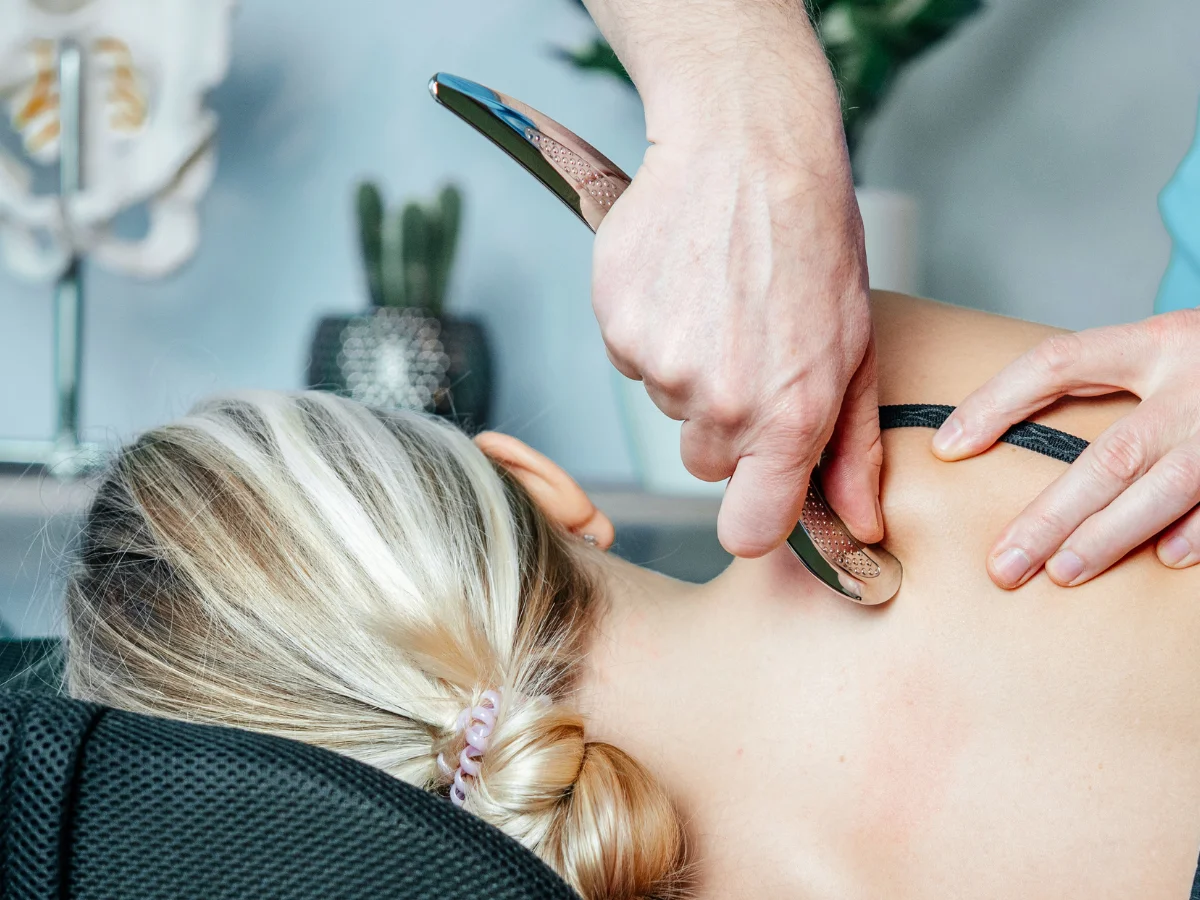
During the assessment, the therapist runs the IASTM instrument over the area to find restrictions — which often feel grainy, like dried ground dirt, under the tool. Once located, they work over the area with a scraping motion or by sliding under the tissue to:
Because the instrument lets the therapist control the pressure applied to deeper tissue layers without damaging the upper layers of skin, a wide range of conditions can be treated safely.
What it treats
Myofascial release with IASTM may be used for a range of soft-tissue and musculoskeletal problems, including but not limited to the following.
Loosening tight, adhered or restricted fascia and soft tissue.
Breaking down scar tissue and adhesions that restrict movement.
Tennis elbow, golfer's elbow, achilles and plantar fasciitis.
Releasing myofascial trigger points and the pain they refer.
Easing postural muscle tightness and imbalance.
Supporting sports-injury recovery and restricted range of motion.
What to expect
Every session begins with an assessment, so treatment targets the tissue that is actually restricting you.
We determine which muscles and tissues are restricted and how they limit your range of motion.
The IASTM instrument is used to scan the area and find fascial restrictions, which feel grainy under the tool.
Oil is applied to reduce friction, then the therapist works over the area with a scraping or sliding motion.
IASTM is paired with therapeutic exercise and reviewed and adjusted across your treatment plan.
Mild discomfort during treatment is normal, and mild bruising or reddening over the worked area afterwards usually settles within a few days. Wherever possible, IASTM is combined with therapeutic exercise in the same session for better, longer-lasting results.
Benefits
Increases tissue extensibility and flexibility.
Promotes cellular activity and tissue repair after injury.
Decreases pain and tightness in the treated area.
Helps reduce excessive scar tissue over time.
Helps restore range of motion faster than rest alone.
Combines with physiotherapy and exercise rehabilitation.
Safety first
IASTM is generally safe and rarely causes more than mild bruising. However, it is not indicated in some situations — always share your medical history with your physiotherapist first.
Please inform your physiotherapist of any relevant medical history, medications and recent procedures before your session, so we can confirm there are no contraindications for IASTM.
Expected outcomes
Most clients begin noticing improvement in tissue tightness and range of motion after 2–3 sessions, depending on how severe and long-standing the condition is. Scar tissue tends to respond more slowly than acute restrictions and may need more frequent treatment.
Our physiotherapists plan IASTM around an assessment for long-term results, rather than relying on a single session. In most cases it is combined with stretching and other physiotherapy treatments as part of a wider plan.
How you can access care
IASTM itself is hands-on, so treatment happens at our South Mumbai clinic or at your home; online consultations are ideal for assessment, guidance and exercise progression.
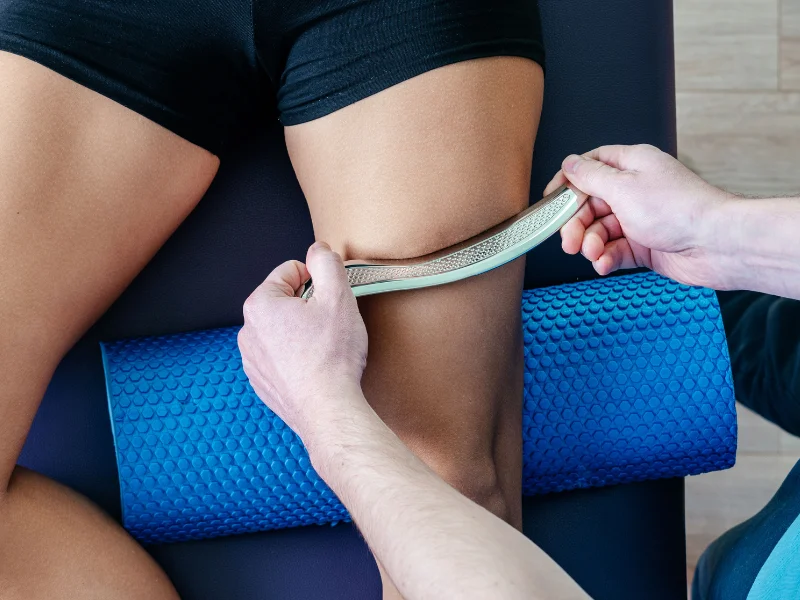
Hands-on assessment and IASTM at our Opera House clinic, close to Charni Road, Girgaon and Marine Lines.
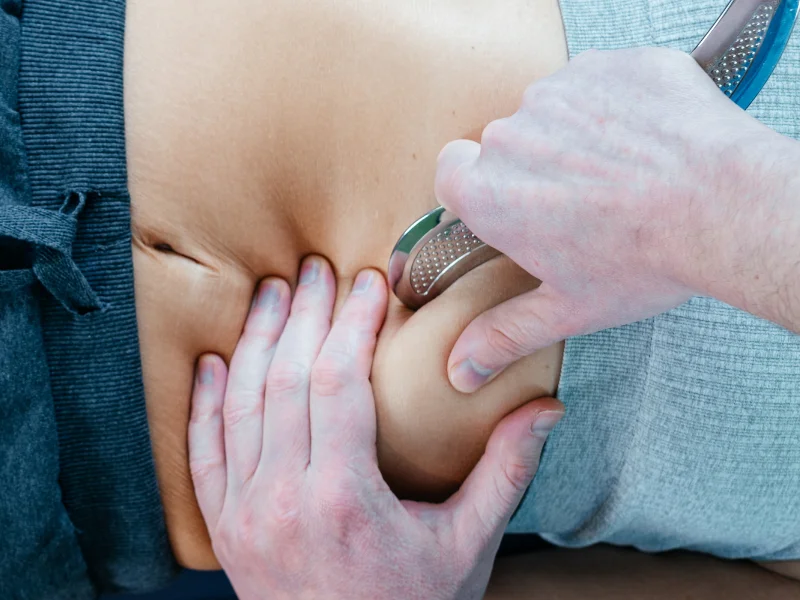
Hands-on treatment at your home across South Mumbai — Colaba, Fort, Nariman Point, Malabar Hill and nearby areas.

Remote assessment, guidance and exercise progression where clinically appropriate.
Why choose TheraCure
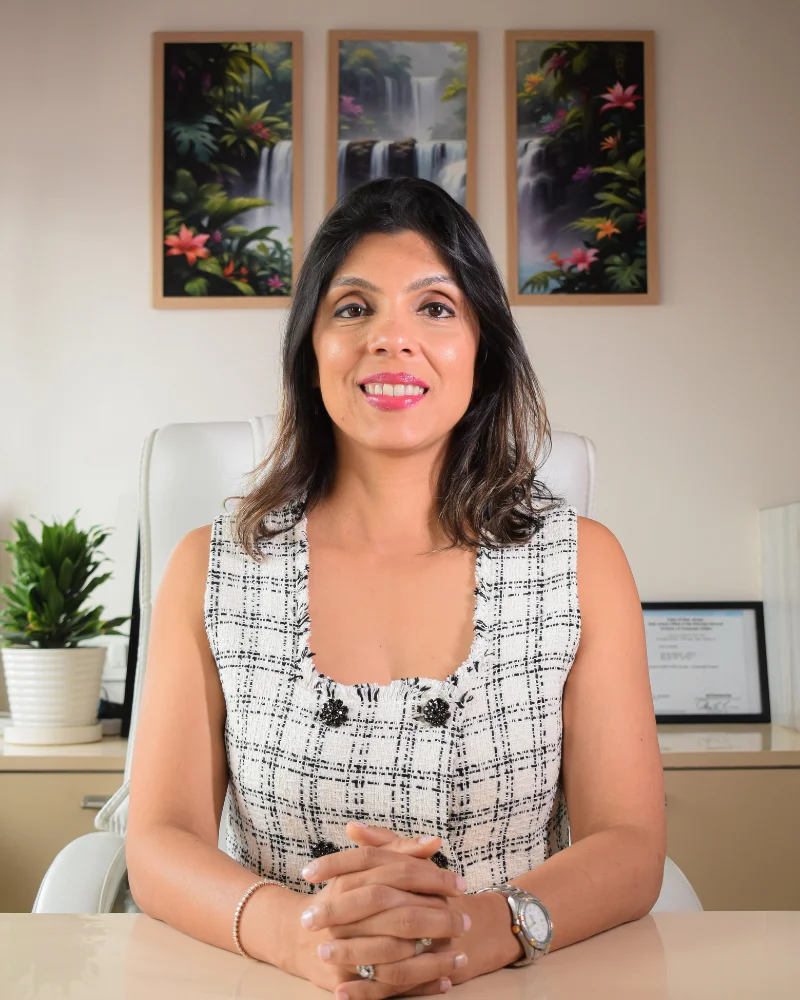
At TheraCure, IASTM is delivered as one element of a larger, assessment-based treatment plan. Your physiotherapist designs an individual plan from the findings of your initial assessment — often combining IASTM with therapeutic exercise, electrotherapy or soft tissue mobilisation to achieve long-term results.
Common questions
IASTM (Instrument Assisted Soft Tissue Mobilization) is a myofascial release technique in which a physiotherapist uses specialised stainless steel instruments to apply controlled, cross-friction pressure to skin, muscle, tendon and fascia, in order to find and release tight, restricted or scarred tissue.
After an assessment, the therapist applies oil and works over the area with the instrument using a scraping or sliding motion, which may cause mild discomfort. Mild bruising or reddening over the treated area afterwards is normal and usually settles within a few days.
IASTM may be used for tight or adhered fascia, scar tissue and adhesions, tennis or golfer's elbow, achilles and plantar fasciitis, myofascial trigger points, postural muscle tightness, sports injuries and restricted range of motion caused by tight soft tissue.
IASTM can increase tissue extensibility and flexibility, promote cellular activity and tissue repair after injury, decrease pain and tightness, reduce excessive scar tissue, and help restore range of motion faster than rest alone, especially when combined with exercise rehabilitation.
IASTM is not indicated over open wounds, infections or healing fractures, or for people with a history of blood-clotting disorders or active bleeding disorders, anticoagulant use, a history of cancer in the affected area, and in some cases pregnancy or recent surgery in the area. Always tell your physiotherapist about your medical history first.
Most clients notice improvement in tissue tightness and range of motion after 2 to 3 sessions, depending on the severity and how long-standing the condition is. Scar tissue tends to respond more slowly and may need more frequent treatment as part of a wider plan.
Ready when you are
Speak with the TheraCure team about instrument-assisted myofascial release in South Mumbai — at the clinic, at home or online.